
The following post contains affiliate links, which sends me a small percentage of any sales at no cost to you.
I’ll admit it: when the Twilight books and movies first came out nearly 20 years ago, I wasn’t interested at all. The frenzy around sparkling vampires and love triangles didn’t appeal to me then, so I skipped the phenomenon entirely.
But last fall, I stumbled upon a thrifted copy of Twilight and decided to buy it. Many people associate these books with cozy fall reading, so when autumn rolled around again this year, I thought, why not?
What started as casual curiosity turned into a full-fledged project. I committed to reading each book, then watching its movie adaptation before moving on to the next installment. For Breaking Dawn, the fourth book in the series, I read the entire book first, then watched its two movie adaptations.
Now that I’ve made it through the entire series, I can confidently say I’m glad I gave it a chance—but I definitely have some thoughts.
Although I wasn’t obsessed, I can see why Twilight became a cultural phenomenon. There’s something captivating about its mix of forbidden love, supernatural lore, and high-stakes drama. But I also couldn’t help noticing some problematic elements, especially as an adult reading this for the first time.
Let’s break it all down:
Twilight
The first book remains my favorite. It has an intriguing mix of high school romance and forbidden love, which immediately drew me in. Bella and Edward’s connection, though a little melodramatic at times, is the heart of the story.
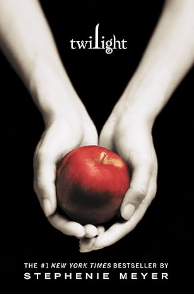
However, reading this as an adult, I couldn’t ignore how manipulative Edward was throughout their relationship. From controlling who Bella spends time with to sneaking into her room without her consent, there were so many red flags.
The fact that Edward is over 100 years old while Bella is a teenage girl only made it creepier. I can’t help but worry about the millions of young people who read and watched this series and thought this was what love looked like. It’s unsettling to think about how these dynamics may have influenced their ideas about romance and relationships.
That said, I did enjoy the Twilight movie the most out of all the adaptations. There’s a certain nostalgia in its indie-film vibe—complete with muted colors, sweeping Pacific Northwest scenery, and that iconic cafeteria scene.
Kristen Stewart and Robert Pattinson perfectly captured the brooding intensity of Bella and Edward, and the soundtrack deserves a mention for its moody, atmospheric songs (hello, Decode by Paramore).
New Moon
This book felt like a bit of a drag compared to Twilight, but I still appreciated the deeper dive into Bella’s emotions after Edward’s departure. Her growing friendship with Jacob brought some lighter moments, even though the love triangle felt predictable.
The New Moon movie leaned heavily into the angst, which made sense but was a little overwhelming. Watching Bella’s months of heartbreak (cue the spinning-camera scene) was tough, though Taylor Lautner as Jacob added a lot of charm.
Eclipse
By this point in the series, the vampire and werewolf lore started to get a little too complicated for me. I struggled to keep track of the rules, alliances, and backstories. However, I did enjoy seeing Bella start to assert herself more as she faced difficult decisions about her future with Edward.
The movie adaptation was decent, though not as memorable for me. The action scenes ramped up, which helped break up the slower moments.
Breaking Dawn
Breaking Dawn brought the saga to a dramatic, almost surreal conclusion. I appreciated how the stakes were raised, but some parts of the story felt over the top (the vampire-human pregnancy, anyone?).
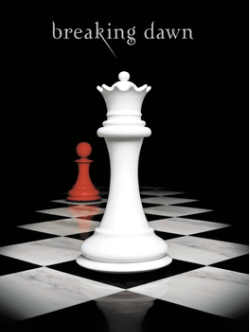
That said, I enjoyed seeing Bella grow into her own power, both literally and figuratively. The ending was surprisingly emotional for me, especially as the series came full circle.
The two Breaking Dawn movies captured the epic feel of the final book, but splitting the story into two parts made the pacing uneven.
The first movie was slower and more focused on Bella and Edward’s wedding and honeymoon, while the second leaned into the conflict with the Volturi.
Both were visually stunning, and I liked how the final battle was handled (even though it wasn’t in the book).
Final Thoughts
Overall, I’m glad I finally experienced Twilight. It’s a little cheesy, sure, but there’s something timeless about its mix of romance, fantasy, and drama. Revisiting the series now also gave me an appreciation for its impact on pop culture in the 2000s—Twilight paved the way for so many other YA adaptations.
Still, reading this as an adult has given me a more critical perspective. The power dynamics between Edward and Bella were troubling, and it’s hard not to worry about how many young readers may have internalized the idea that control, secrecy, and obsession are romantic. At the same time, I can see how the series captured a generation’s imagination with its mix of swoon-worthy moments and supernatural intrigue.
If I had to pick favorites, both Twilight and Breaking Dawn (the first and last books) stood out to me. The beginning captured the excitement of first love, while the ending brought a satisfying sense of closure. On the movie side, Twilight wins for its charm and atmospheric style.
I’d love to hear your thoughts! Were you a fan of Twilight when it first came out? Have you revisited the series since? Let me know in the comments, or share your experience with the saga!
To see more writing from me, be sure to subscribe to The Bitter Lemon by clicking “subscribe” on the right side of your screen. Want even more? Subscribe to my newsletter to get roundups, book recs and lifestyle tips.
 The Bitter Lemon
The Twilight Saga is my guilty pleasure. Both the books and the movies. They relax me. I try to read and watch every year.
That’s awesome!! I do think a lot of people like reading and watching them every year, especially during the colder months 🙂