
The following post contains affiliate links, which sends me a small percentage of any sales at no cost to you.
Earlier this month, my podcast cohost and I had Vinnie Hess, founder of Purfect Water, on our podcast. In the episode, he completely schooled us about the potential dangers of tap water and the benefits of alkaline water.
I was so dumbfounded by what he told us, I knew I had to get a handle on the water situation in my apartment.
Before I dive into it, I want to highlight that I do live in a rental apartment because if you own a home, you have more options when it comes to your water system (which is heavily discussed in the podcast episode).
What is alkaline water?
Alkaline water sounds really luxe and high tech, but it’s really just water that has a higher pH and contains alkaline minerals (calcium, iron, potassium, magnesium).
Alkaline water has a pH of 8+, while acidic water has a lower pH. The benefits of alkaline water are somewhat controversial. There have been claims that it improves your health, but there’s not a lot of scientific information that backs them.
When I was doing my research, I think it’s more important to understand what the tap water is like in your area, and if it negatively affects your health, and go from there.
I’m not a scientist or a doctor, so please consult professionals as needed. Alkaline water isn’t beneficial for everyone (for example, those with kidney disease), and it’s not necessarily good for pets (I give kitty Blanche Ozarka water, which has worked for her body). Everyone is different!
Is tap water that bad?
You can enter your zip code on the Environmental Working Group website and get detailed information about the tap water in your area.

Although the water in Austin, Texas isn’t horrible, it contains contaminants that can potentially cause cancer.
While this doesn’t surprise me, one of the biggest aha moments I’ve had during this “Water journey” is that yes, water systems are regulated by the government, but that doesn’t mean the legality of them is necessarily safe or good.
Enter: Flint, Michigan — a devastating example of what can happen when the government relies on outdated studies and old infrastructure, while refusing to fix serious issues that affect working class and marginalized communities.
I found this information that really struck me (article source here):
Nationwide between 2016 and 2019, the rate of drinking water violations increased in communities of color, low-income communities and those with nonnative English speakers, as well as areas where people live in “crowded housing conditions” and those where people have “sparse access to transportation,” according to a 2020 analysis by the Natural Resources Defense Council.
“That means that water systems that serve the communities that are the most marginalized are more likely to be in violation of the law – and to stay in violation for longer periods of time,” the advocacy group said.
So, not to be a downer, but I look at this (now) the same way I view the FDA. The FDA has its set of guidelines and regulations, but that may not match my personal needs or desires.
How I tested the water in my apartment
Before I get into how I treated my apartment water, let me tell you about my water situation and how I tested it. For the longest time (I think 5-6 years), I used the tap water for everything. I did have a large dispenser with a filter that I put in my fridge for drinking, but I didn’t think much about the water at all.
Well, until the freeze in 2021 when I didn’t have running water for three days. I was ill-prepared and the only drinking water I had was from my fridge container. I tried ordering bottled water online but delivery trucks couldn’t get on the roads and local stores were sold out.
I learned my lesson the hard way. So, when two Ozarka reps visited my front door, I took them up on their offer and rented a water dispenser.
I get 5-gallon containers of water delivered to my door whenever I need them. Typically, every other month, I get four containers. I use the water for Blanche and I to drink 🙂
I really like having this service. It means I’ll always have plenty of clean drinking water, no matter what happens with the city (I tend to stock up in the colder months) or within my apartment complex.
After having the podcast conversation with Vinnie, I realized my Ozarka water may not be as clean as I originally thought.
So, I ordered a Digital Water Tester to measure the purity of the water from my tap and from my Ozarka deliveries.
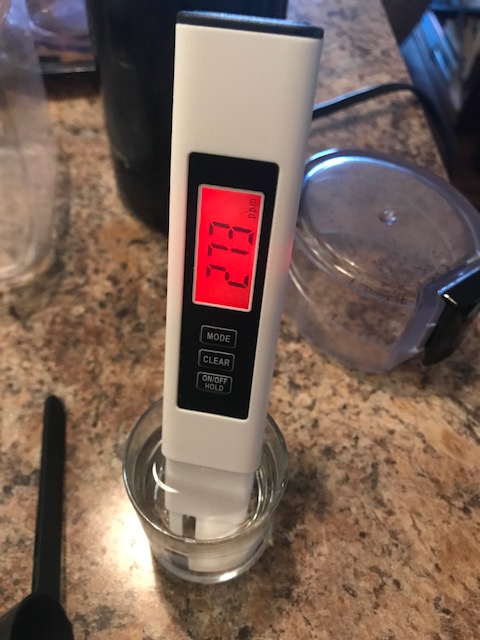

As you can see, my tap water measured 273, and the Ozarka water measured 54 — the higher the number, the dirtier the water.
According to the tester, any water between 200-300 is marginally acceptable. 500 is the EPA’s maximum contamination level. Yuck!
Anything 0-50 is considered “ideal” drinking water (that’s when the tester turns green), so I was happily surprised with the Ozarka water! I don’t love that it’s in a plastic jug, but I’m picking my battles here.
After doing this test, I wanted to order an alkaline filter and a pH tester.
How I get affordable alkaline water at home
I started searching for the right filter option for me and reading lots of reviews. I also wanted something affordable — obviously drinking clean, healthy water is important, but I am on a budget.
You may have seen alkaline water in the store, but this is often created using baking soda — it’s not necessarily clean water.
I was focused on alkaline drinking water, but saw that there are loads of affordable options to filter your water for bathing (that will be my next battle), too.
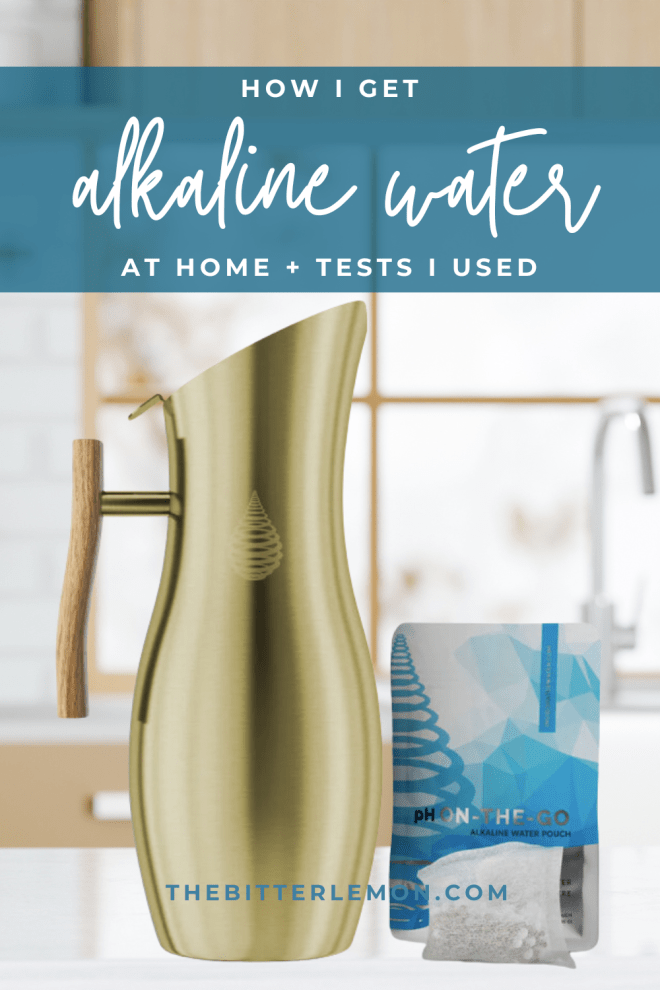
I settled on the Invigorated Water pH Vitality Water Pitcher. The brand had great reviews, and I liked that the filter can go anywhere, which would be great for traveling or using it in any water container.
The pitcher comes with one filter — which lasts for 105 gallons of water! — but I ordered more to have on-hand. The filter comes in different sizes, so you can pick what works best for you, but the I got the 100g, and only needs replacing every 3-4 months, which I love.
With these filters, the container is really up to you. I bought the pitcher (in gold), which I love, but you could use something you already own. I’ve been using it for a month now, and I just keep the filter in the pitcher, and fill it with the Ozarka water.
The pitcher stays cold, so I keep it on my counter during the day and refill my cup from it. I also use the alkaline water to make my coffee or tea.

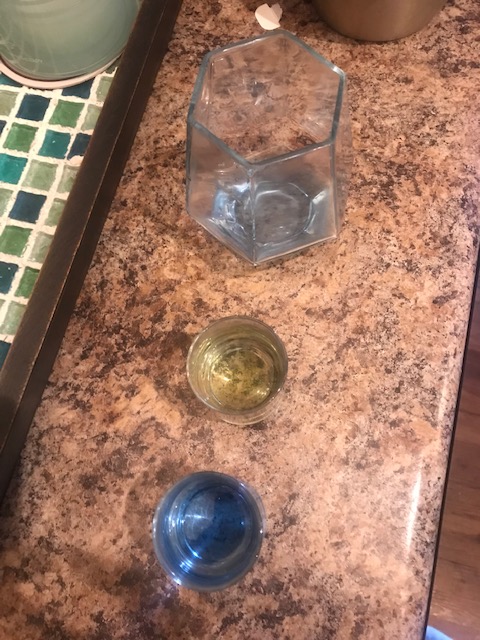
pH test results guide; my water, (top) pitcher water, (middle) Ozarka, (bottom) tap water.
Once I started using the alkaline filter, I got a pH testing kit, and tested my tap water, my Ozarka water, and the Ozarka water in the pitcher (using the alkaline filter).
I won’t lie, I did this round of tests twice because I was shocked at the results! My tap water tested as alkaline (but still contaminated, of course) while the Ozarka water tested as acidic, and the filtered Ozarka water tested as alkaline.
So, all in all, the filtered Ozarka water is the best option, but it was a bit of a journey to get there. I learned a lot along the way (and am still learning), and even this solution isn’t perfect, but it will work for now.
Have you heard of alkaline water?
This review is not sponsored — nor are any of the reviews on this blog. I am a beauty and skincare junkie and enjoy sharing the products I love right here! For more reviews and similar posts, please subscribe to the blog by clicking subscribe on the right side of your screen. Cheers!
 The Bitter Lemon
One Comment