The following post contains affiliate links, which sends me a small percentage of any sales at no cost to you.
For the last year, I’ve shared much of the journey I took when I was laid off from my full-time job. It took me almost an entire year to find a job, and the time between those two events was one of the most stressful times in my life.
Saying I was excited and grateful to get the job I currently have is an understatement! But, although I had no logical reason to think this way, I quickly realized how scared I was of getting laid off a third time.
I thought that getting a job would make the weight of my layoff go away, but it didn’t (I mean, it did a lot, but just not entirely).
So, I took a leap of faith and talked to my manager about it when we were setting my personal development goals. I never want to let my past affect my present, at least in a negative way.
My manager was completely understanding and offered her support. I said I wanted to find some reading to help me move forward and she helped me look for titles.
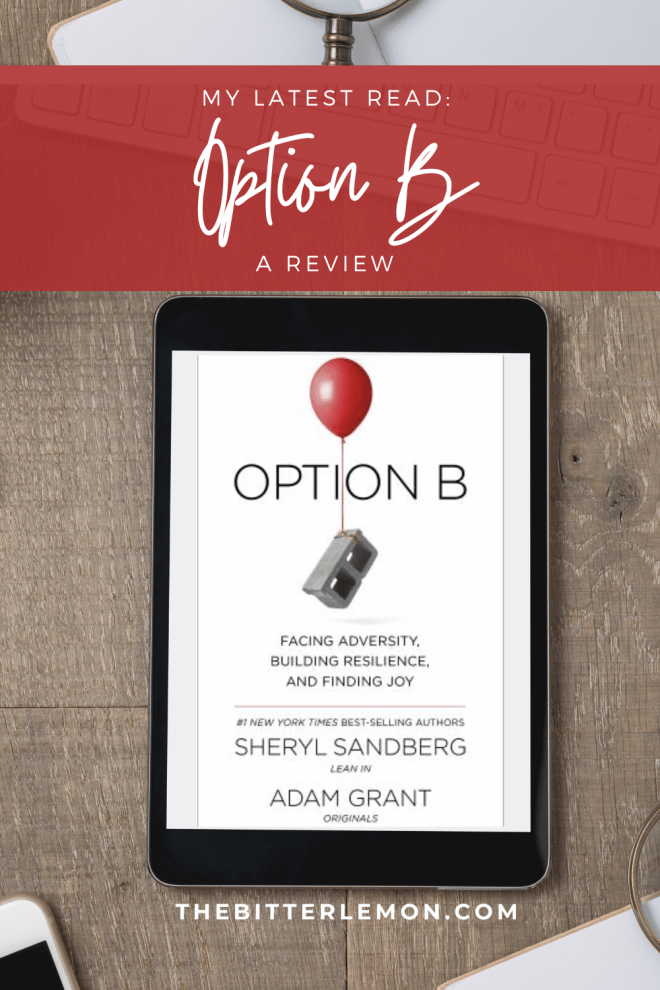
I settled on “Option B: Facing Adversity, Building Resilience, and Finding Joy” by Sheryl Sandberg and Adam Grant.
I’ve read some of Adam Grant’s work before and have heard good things about Sheryl Sandberg. This book sounded like it was mostly from Sheryl’s perspective after the sudden death of her husband.
Her friend Adam Grant, a psychologist at Wharton, told her there are concrete steps people can take to recover and rebound from life-shattering experiences.
Option B combines Sheryl’s personal insights with Adam’s eye-opening research on finding strength in the face of adversity. But the book goes beyond Sheryl’s loss to explore how a broad range of people have overcome hardships, including illness, job loss, sexual assault, natural disasters, and the violence of war. Their stories reveal the capacity of the human spirit to persevere . . . and to rediscover joy.
I read a chapter a week, and I highlighted so many good quotes and takeaways from this book!
I’ll share some here:
- Resilience is the strength and speed of our response to adversity—and we can build it. It isn’t about having a backbone. It’s about strengthening the muscles around our backbone.
- Loss, grief, and disappointment are profoundly personal. We all have unique circumstances and reactions to them.
- Option A is not available. So let’s just kick the shit out of Option B. Life is never perfect. We all live some form of Option B.
- We plant the seeds of resilience in the ways we process negative events. Hundreds of studies have shown that children and adults recover more quickly when they realize that hardships aren’t entirely their fault, don’t affect every aspect of their lives, and won’t follow them everywhere forever.
- Counting blessings can actually increase happiness and health by reminding us of the good things in life.
- We all deal with loss: jobs lost: loves lost, lives lost. The questions is not whether these things will happen. They will, and we will have to face them.
- Everyone makes mistakes. Some are small but can have serious consequences. None of us can change what we have already done.
- Self-compassion comes from recognizing that our imperfections are part of being human. Self-compassion is associated with greater happiness and satisfaction, fewer emotional difficulties, and less anxiety.
- Writing can be a powerful tool for learning self-compassion. Turning feelings into words can help us process and overcome adversity.
No matter what you’re going through, it always helps to know (and remember) that you’re not alone. this book served as a great reminder for me!
What types of self-improvement books are you reading?
For more book recommendations, be sure to subscribe to the blog (look to the right) and follow me on Goodreads @thebitterlemon – where I share more of my book picks. Also, check out my printable bookmarks and Book Club Journal Pages in my Etsy Shop.
 The Bitter Lemon