

The following post contains affiliate links, which sends me a small percentage of any sales at no cost to you.
At this point, my music deep dive has taken me through legendary guitarists, iconic bands, and some truly wild behind-the-scenes stories.
So when I picked up W.A.R.: The Unauthorized Biography of Axl Rose, it felt like a bit of a detour.
After all, Axl Rose isn’t a guitarist; he’s a frontman.
But as it turns out, this may have been one of the most eye-opening reads yet.
Why I Picked It Up
I’ll be honest, this choice was less about Axl Rose and more about the author, Mick Wall. I had previously read his book on Black Sabbath and loved his storytelling style, so I trusted that this would be a compelling read regardless of the subject.
I also knew very little about Guns N’ Roses (really just the hit songs).
A Tougher Story Than Expected
Of all the musicians I’ve read about so far, Axl Rose may have had the most difficult early life.
He grew up in Indiana under extremely challenging circumstances, and that instability clearly followed him into adulthood. By the time he made his way to California, the place that’s supposed to make artists, it felt less like opportunity and more like another uphill battle.
That context added a layer to everything that followed. It didn’t excuse his behavior, but it did make it easier to understand where some of it came from.
The Rise of Guns N’ Roses (and the Chaos That Came With It)
The formation of Guns N’ Roses was fascinating, but also… intense.
Even compared to other rock biographies, the level of drug use in this era stood out. It’s one of those situations where you almost have to pause and ask how anything functioned at all, let alone a band that became this successful.
And yet, somehow, they made it work—at least for a while.
Reputation, Rivalries, and Being on the “Wrong Side”
One of the most interesting (and complicated) parts of the book was how Axl was perceived—both by fans and by other artists.
There’s a notable thread involving Kurt Cobain, who was not a fan of Axl, understandably.
In fact, there was a section of the book I took note of:
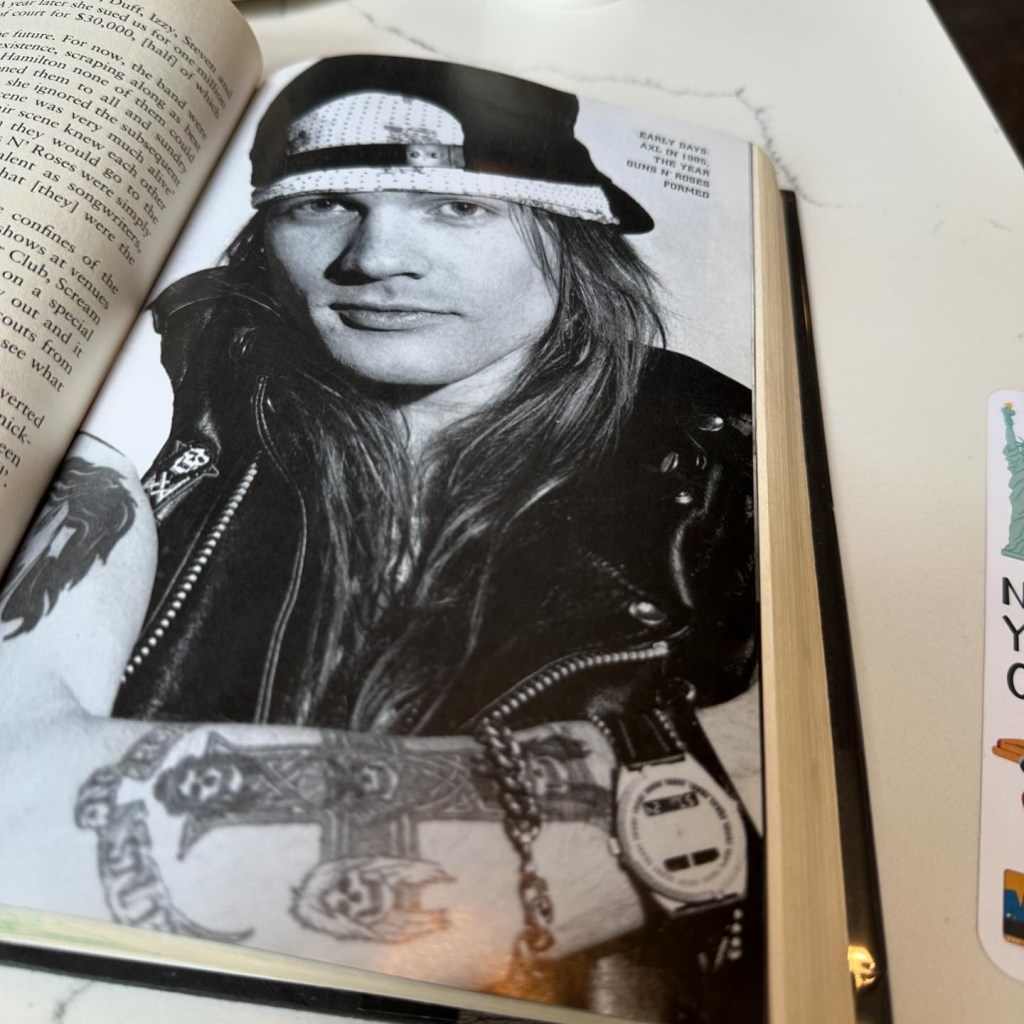
“For Kurt Cobain, though, Guns N’ Roses represented everything he most despised about rock stardom, seeing them as unforgivably self-indulgent and out of step with the times. ‘I knew we were a hundred times better than fucking Guns N’ Roses — or any of that shit,’ he remarked matter-of-factly. Worse still, because of ‘One in a Million’, he considered them racist and homophobic. A view he did nothing to hide in subsequent interviews.
‘They’re really talentless people,’ Cobain told one writer, ‘and they write crap music.’ The only thing he had in common with Axl, Cobain told his biographer, Michael Azzerad, was that they both came from small towns ‘and we’ve been surrounded by a lot of sexism and racism. But our internal struggles are pretty different. I feel like I’ve allowed myself to open my mind to a lot more things than he has. His role has been played for years. Ever since the beginning of rock n’ roll, there’s been an Axl Rose. It’s just totally boring to me. Why it’s such a fresh and new thing in his eyes is obviously because it’s happening to him personally and he’s such an egotistical person that he thinks the whole world owes him something.'”
Axl often comes across as someone who landed on the wrong side of history when it comes to social issues, especially in an industry that was rapidly changing. Reading this with a modern lens made those moments stand out even more.
It adds to the complexity of him as a figure: talented, driven, but also deeply polarizing.
The Visuals (and the Vibe)
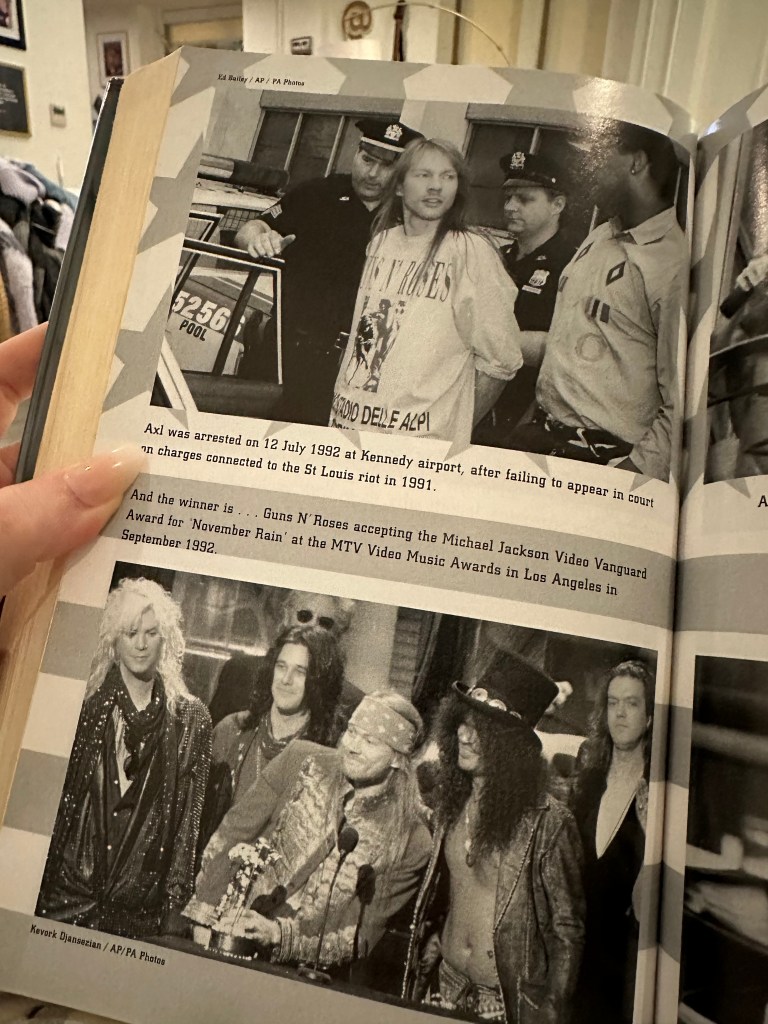
One unexpected highlight? The photos.
There’s something so effortlessly cool about the band during that era. It’s hard not to notice how distinct their style was—especially considering they likely didn’t have the kind of styling teams artists rely on today.
It felt authentic, chaotic, and completely of its time.
Final Thoughts
Going into this, I didn’t expect to come away with such a strong impression of Axl Rose—or Guns N’ Roses as a whole.
But now I feel like I understand not just their music, but the environment that shaped it. And while Axl isn’t the most likable subject I’ve read about, he might be one of the most compelling.
So… Who’s Next?
That’s the question I keep coming back to.
This deep dive started with iconic guitarists, but it’s clearly expanding into something bigger—stories of influence, chaos, talent, and everything in between.
Do I go back to guitar legends? Or follow the thread into more frontmen and complex figures?
Either way, I’m officially at the point where I know a lot more about rock history than I ever expected to…
…and I’m not mad about it.
For more book recommendations, be sure to subscribe to the blog (look to the right) and follow me on Goodreads @thebitterlemon – where I share more of my book picks.
 The Bitter Lemon