
The following post contains affiliate links, which sends me a small percentage of any sales at no cost to you.
I recently went down a rabbit hole (for reasons I’d rather not say — ha) on famous guitarists, and somehow that path led me straight to Van Halen (because where else would it go?).
I should probably admit this up front: I didn’t know much about the band before picking up this book. Of course, I knew the hits — you’d have to actively avoid them not to — but beyond that, my knowledge was… thin.
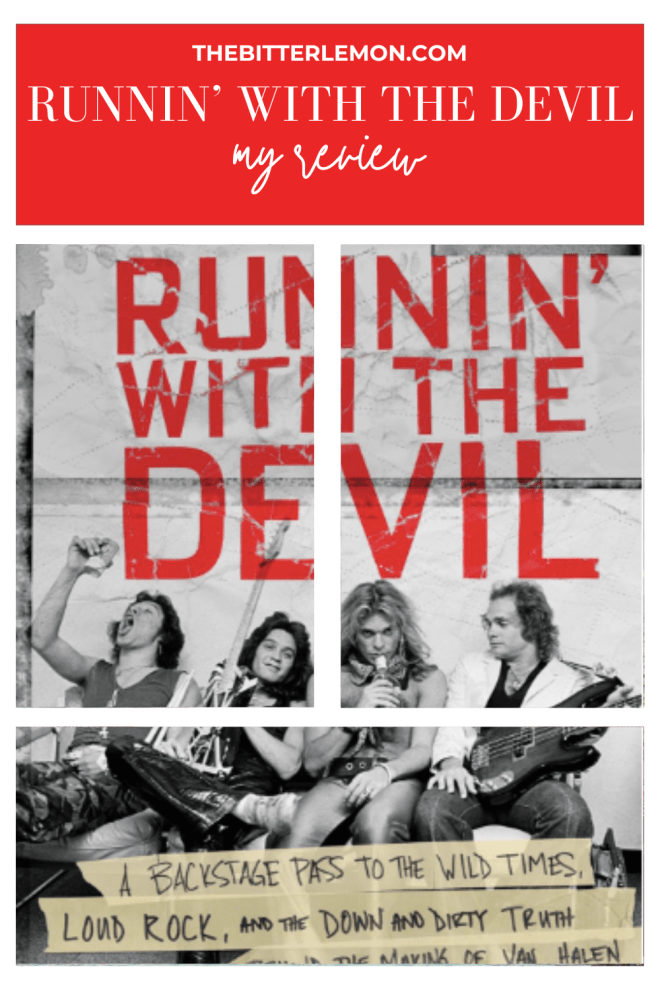
Enter Runnin’ With the Devil: A Backstage Pass to the Wild Times, Loud Rock, and the Down and Dirty Truth Behind the Making of Van Halen by Noel E. Monk.
Monk was Van Halen’s manager from 1978 to 1985, and this book covers the band’s meteoric rise during the David Lee Roth era. If you enjoy books about white guys behaving badly — especially when partying, ego, money, and excess are involved — this one absolutely delivers.
An unexpected bonus of finding this book was that it forced me to get familiar with my local library’s non-fiction section. I quickly discovered that it’s a treasure trove of music books, and I have a feeling I’ll be spending a lot of time in those stacks going forward.
From the first chapters, it’s clear why this book is such a compelling read. Monk is an excellent reporter and storyteller. He walks you through the band’s formation, their early innocence, their raw talent, and their complete lack of preparedness for what fame would bring.
You get the sense that no one involved fully understood what they were stepping into — including Monk himself.
I’ll admit, I initially felt unsure about reading a “tell-all” written by a former manager. I’m always a little wary of stories that seem designed to embarrass people for profit.
But Monk surprised me. While he doesn’t shy away from the chaos — drug use, alcohol abuse, destroyed hotel rooms, endless parties, and sleeping with countless fans — he largely keeps judgment out of it. Much of the behavior is framed as a product of rock ’n’ roll culture and the era itself. It’s not glorified, exactly, but it’s also not moralized.
And yes, all the infamous stories are here: the ketchup-covered hotel rooms, champagne bottles flying, cocaine lines, and the legendary brown M&M clause in the rider. But oddly enough, those weren’t the moments that shocked me most.
What stuck with me far more was how the band treated their bassist, Michael Anthony, and eventually Monk himself. Reading about the way group dynamics can turn cruel — not just one bad actor, but a collective — was unsettling.
I don’t think I’ve read many books where the quiet, cumulative meanness of a group stood out so starkly. It was a reminder that while individuals can be difficult, groups can be downright brutal.
The book focuses entirely on the David Lee Roth era of Van Halen, which I found fascinating. I’ve since learned that fans often debate the “DLR era” versus the “Van Hagar” era, when Sammy Hagar took over as frontman. From Monk’s account, it’s clear these were essentially two different bands, with two different sounds and sensibilities.
One thing that really came through was how powerful Van Halen was as a live act in their early years. They routinely blew headlining bands off the stage — including Black Sabbath, Journey, and even the Rolling Stones. Their talent wasn’t theoretical; it was undeniable and immediate.
One passage in the book stopped me in my tracks:
“I look back on this night now as an impossibly innocent and happy time. Imagine walking into a hotel bar even one year later and seeing the guys from Van Halen throwing back shots of Jack Daniel’s, rubbing elbows with assorted businessmen and tourists, none of whom had any idea who these kids were. The anonymity would not last, of course, and neither would the innocence. It never does.”
Just before this, Monk reflects on their rocky opening night and how optimistic he still felt about the band’s future. Knowing what comes next makes that innocence feel especially fragile — and fleeting.
After finishing the book, I looked up reviews and found them surprisingly mixed. I suspect hardcore Van Halen fans didn’t love seeing certain stories laid bare. One review claimed that half the book was about selling t-shirts, which felt like a stretch — but merchandising was a major part of the story.
At the time, band branding wasn’t nearly as sophisticated as it is now, and it was genuinely interesting to read about how Van Halen fought knockoffs and built their business around their image.
This book also reinforced something I’ve been discovering all year: how fun it is to explore a subject from multiple angles. After reading Katie Couric’s memoir, I listened to Connie Chung’s. After The Wolf of Wall Street, I read Steve Madden’s book to get his side of the story. I’ve done the same with fashion — Tommy Hilfiger, André Leon Talley, and the Anna Wintour biography — and now music has officially entered the mix.
Reading about Van Halen cracked open a whole new can of worms. I’ve already checked out a Black Sabbath book, and I’ve got my eye on the Sex Pistols book — also by Noel Monk. I don’t know what this says about me, exactly, but I’m having a great time finding out.
If you’re curious about rock history, the machinery behind fame, or what happens when immense talent collides with excess, Runnin’ With the Devil is absolutely worth picking up.
For more book recommendations, be sure to subscribe to the blog (look to the right) and follow me on Goodreads @thebitterlemon – where I share more of my book picks.
 The Bitter Lemon
2 Comments